
"tropical agriculture"
1000 article(s) found
How to quote Yunnan Coffee details of Yunnan Coffee offer in 2018
Professional coffee knowledge exchange more coffee bean information please follow the coffee workshop (Wechat official account cafe_style) according to the current market data, emerging countries represented by China, Brazil, Russia, India and South Africa currently consume 20% of the world's coffee, and by 2020, this proportion will reach 35% Yunnan coffee trading center is located in China's main coffee producing areas.

Introduction of highland, tropical climate, acid red volcano Kenya coffee growing area
Kenya Coffee growing area Kenya's coffee producing areas are mainly concentrated in Mount Kenya (Mt. The plateau region represented by Kenya). Tropical climate, acid red volcanic soil provides a natural and suitable growth environment for coffee. The main producing areas are Nyeri and Ruiru in the middle of the country. The Kenyan coffee variety was originally brought to Kenya for cultivation by Bou.

Introduction of Ugandan coffee beans with low acidity and delicate taste
Uganda's coffee production ranks first in Africa, accounting for more than 70% of its total exports. Uganda is also the hometown and main producing area of Robes specialty coffee. In the 1960s, Ugandan coffee production remained at 3.5 million bags a year. By the mid-1980s, coffee production had dropped to 2.5 million bags a year, mainly for political reasons. But now coffee production is on the rise again, which is large at present.

Ruwenzori (Ruwensori) in the west of Uganda coffee producing area with delicate taste and unique flavor.
Ganda coffee production ranks first in Africa, accounting for more than 70% of its total exports, while Uganda is also the hometown and main producing area of Robes specialty coffee. In the 1960s, Ugandan coffee production remained at 3.5 million bags a year. By the mid-1980s, coffee production had dropped to 2.5 million bags a year, mainly for political reasons. But now coffee production is on the rise again, about

Robes, a coffee variety from the mountains of Elgon and Bugisu, Uganda
Uganda's coffee production ranks first in Africa, accounting for more than 70% of its total exports. Uganda is also the hometown and main producing area of Robes specialty coffee. In the 1960s, Ugandan coffee production remained at 3.5 million bags a year. By the mid-1980s, coffee production had dropped to 2.5 million bags a year, mainly for political reasons. But now coffee production is on the rise again, which is large at present.

Introduction to Mercedes Manor in El Salvador Coffee Manor
The Republic of El Salvador, located in the north of Central America, is the most populous country in Central America. The country is bordered by Honduras to the north, the Pacific Ocean to the south and Guatemala to the northwest. The national economy is dominated by agriculture, and the main crops are coffee and cotton. El Salvador is also one of the birthplaces of ancient Mayan culture, with not only distant culture, but also volcanoes, plateau lakes and Pacific coast.
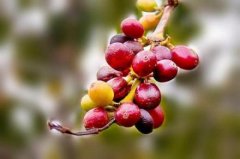
Coffee knowledge equator-centered coffee belt
Most of the coffee production is between the Tropic of Cancer, 25 degrees north of the tropical or subtropical equator and 30 degrees south of the equator. An area with an annual average temperature of 16-25 degrees Celsius, no Frosts Descent and rainfall of 1600-2000 mm. At present, coffee is mainly produced in more than 70 countries. The Big self is located at an altitude of 300,400m, sometimes between 2000 and 2500 meters above sea level.

Balanced, soft, fine texture Salvadoran coffee estate region Flavor Taste Features Fine coffee
El Salvador is located in the north of Central America and is the most densely populated country in Central America. Honduras borders the country to the north, the Pacific Ocean to the south and Guatemala to the northwest. The national economy is dominated by agriculture, with coffee and cotton as the main crops. El Salvador is also one of the birthplaces of ancient Mayan culture, not only with a distant culture, but also with volcanoes, plateau lakes and the Pacific coast.

Coffee Basics Where is the coffee belt distributed
Coffee production occurs mostly between Tropic of Cancer, 25 degrees north of the equator and 30 degrees south of the equator in tropical or subtropical regions. Areas with an annual average temperature of 16-25 degrees Celsius, frost-free and rainfall of 1600-2000 mm. At present, there are more than 70 major coffee producing countries. The largest one is located at an altitude of 300-400 meters, and sometimes at an altitude of 2000-2500 meters.

Regional characteristics of Ugandan Coffee Flavor description Grinding scale treatment
Uganda Coffee Flavor description Grinding scale treatment method Wet aroma (1-5): 3.4 acidity (brightness) (1-10): 8 taste (layer) (1-10): 8.5 taste (Alcohol thickness) (1-5): 4 aftertaste (residue) (1-10): 8.1 balance (1-5): 0 basic score (50): 50 later when the ship replaced the sailboat

Introduction to the producing area of Brazilian Coffee Manor with strong fragrance
In terms of natural conditions, Brazil is in the tropics, with a tropical rain forest climate in the north, hot and humid all the year round, suitable for tropical crops, coffee trees are sunny crops, and sufficient sunlight is the condition for their growth. Historically, Brazil has been a Portuguese colony for a long time. In order to meet the needs of Western Europe, Brazilian coffee has been growing single crops for a long time and developing tropical plantations.
Ugandan Coffee introduces Kerry
The Republic of Uganda, located in eastern Africa, is a landlocked country across the equator. Uganda is bordered by Sudan to the north, Kenya to the east, Lake Victoria to the southwest, Tanzania and Rwanda to the south, and Congo to the west. The territory is located between the east and west branches of the East African Rift Valley, tilting gently from west to middle and low and flat in the south. Margarita Peak is 5109 meters above sea level, which is the highest in the country.

Introduction to Wen Runping and Salvadoran Coffee with Grinding degree, Variety, characteristics and Price
The Republic of El Salvador, located in the north of Central America, is the most populous country in Central America. The country is bordered by Honduras to the north, the Pacific Ocean to the south and Guatemala to the northwest. The national economy is dominated by agriculture, and the main crops are coffee and cotton. El Salvador is also one of the birthplaces of ancient Mayan culture, with not only distant culture, but also volcanoes, plateau lakes and Pacific coast.

Rich aroma, smooth and meticulous taste of Nicaraguan Tianyi Manor Coffee
Columbus arrived here in 1502 and reached the east coast of Nicaragua. In 1522, Spanish colonists began to conquer the region. The cities of Granada and Leon were founded in 1524. From then on, Nicaragua became a Spanish colony and came under the jurisdiction of the Governor's Office of Guatemala. The city of Leon developed into a political and cultural center; Granada became a commercial and agricultural center. In the later period of colonial rule

Introduction to the Variety Manor in Rwanda Coffee Bean production area by Grinding method
The taste of Rwandan coffee is described as a grassy aroma with tropical climates. in addition to the sweetness of fruit, this coffee also gives people a feeling of freshness, clarity, and freshness. Bourbon coffee grown in Rwanda is amazing for its sweet fruit, full-bodied, unrestrained and lingering aftertaste. This kind of coffee is delicious
4C Association Coffee Certification which Coffee Certification
4C certification is a widely accepted management rule in the world, which involves the sustainable development of coffee cultivation, production, processing and other aspects of the supply chain, including social, environmental and economic principles. Coffee practitioners are required to protect biodiversity, protect all kinds of national endangered animals and plants, correctly use and handle pesticides and other chemicals, protect the natural environment and

Introduction of Robbs Special Coffee growing area in Uganda Coffee production area
Uganda's coffee production ranks first in Africa, accounting for more than 70% of its total exports. Uganda is also the hometown and main producing area of Robes specialty coffee. In the 1960s, Ugandan coffee production remained at 3.5 million bags a year. By the mid-1980s, coffee production had dropped to 2.5 million bags a year, mainly for political reasons. But now coffee production is on the rise again, which is large at present.

Description of Information Flavor of Brazilian Coffee Bean planting Historical Variety Manor
Communication of professional baristas Please pay attention to the coffee workshop (Wechat official account cafe_style) due to inherent conditions, the Brazilian government has invested a lot of resources to improve varieties and disease resistance since the 1930s. Among them, the results of bean research still affect the planting habits of Latin America as a whole. For example, they cultivated a natural variant of Bourbon, Yellow, from 1/1000000 opportunities in the 1930s.
Coffee beans, Ugandan Coffee, Cry.
The Republic of Uganda, located in eastern Africa, is a landlocked country across the equator. Uganda is bordered by Sudan to the north, Kenya to the east, Lake Victoria to the southwest, Tanzania and Rwanda to the south, and Congo to the west. The territory is located between the east and west branches of the East African Rift Valley, tilting gently from west to middle and low and flat in the south. Margarita Peak is 5109 meters above sea level, which is the highest in the country.

Roasting record of varieties baked by Wen Runping and Renas Manor Coffee in El Salvador
The Republic of El Salvador, located in the north of Central America, is the most populous country in Central America. The country is bordered by Honduras to the north, the Pacific Ocean to the south and Guatemala to the northwest. The national economy is dominated by agriculture, and the main crops are coffee and cotton. El Salvador is also one of the birthplaces of ancient Mayan culture, with not only distant culture, but also volcanoes, plateau lakes and Pacific Rim.